
Restaurant Websites That Fill Tables in St. Augustine & Palm Coast
HTML menus instead of PDFs, reservations and ordering up front, hours that are never wrong, and local SEO for a market that is half tourists, half regulars.
A restaurant website in St. Augustine or Palm Coast has about three seconds to answer four questions: what kind of food, are you open, where are you, and can I see a menu. Most sites in both towns fail at least one of those on a phone — usually the menu, trapped in a PDF that takes forever to load and is unreadable when it does. This guide covers restaurant website design for these two markets: what fills tables, what quietly turns people away, and how the tourist-and-local mix changes the job. For the broader service, see our restaurant web design & SEO page.
You are serving two completely different visitors
In St. Augustine, a huge share of your site traffic is visitors: people planning a trip weeks out, or standing downtown right now searching “seafood near me.” They have never heard of you, they decide fast, and they decide on photos, menu and distance. The rest are locals — from Davis Shores, Anastasia Island, St. Augustine Beach, up to Vilano Beach and out to World Golf Village — who decide on consistency: current hours, easy reservations, a reason to come back. Palm Coast flips the ratio: mostly year-round and seasonal residents across communities like Grand Haven and Palm Coast Plantation plus beach traffic along the A1A corridor through Flagler Beach, with visitors concentrated in the oceanfront Hammock. One site has to work for both kinds of visitor in both towns.
Menus: HTML, never a PDF
The single highest-impact fix on most restaurant sites is replacing the PDF menu with a real HTML page. The reasons stack up:
- Speed: a PDF is a multi-megabyte download on a phone on vacation data; an HTML menu loads in a second.
- Readability: HTML reflows to the screen; a PDF makes people pinch and zoom through a letter-size layout.
- Search: Google reads HTML menus, so dishes can match searches like “shrimp and grits st augustine.” A PDF's contents mostly do not.
- Accessibility: screen readers handle a proper HTML menu; most menu PDFs are inaccessible.
- Updates: editing a page beats re-exporting, re-uploading and re-linking a file every time a dish changes.
If the design team insists the print menu is the brand, keep the PDF as a secondary link. The default a hungry phone user taps must be HTML.
Reservations, waitlists and ordering: meet guests where they decide
Whatever system you use for reservations or waitlists, link it prominently — in the header, not buried on a contact page — and make sure the button works on a phone. If you do takeout, the same goes for online ordering, and it is worth linking your own ordering system rather than only the delivery apps, for the same reason hotels prefer direct bookings: the apps charge for the privilege and own the customer. And everywhere a guest might look — site, Google profile, social bios — hours must agree. A “closed” that turns out wrong loses a table tonight; an “open” that turns out wrong loses the guest forever.
Local search decides who even sees the site
Before anyone reaches your site, they usually see the map pack. The fundamentals: a Google Business Profile with the most specific category, photos of real plates and the real dining room, a menu link that goes to the HTML menu, hours kept current including holidays, and a steady stream of reviews you actually reply to. We cover profile work on our Google Business Profile St. Augustine and Palm Coast pages. On the website side, the home page should name the town and the kind of food in plain text — not just a logo over a photo — because that is what search engines and first-time visitors both need. No one can guarantee map rankings, but complete, accurate and active beats incomplete almost every time.
Seasonality: plan for the swings
Both towns breathe with the calendar: St. Augustine swells during the holiday season and summer; the beachside communities surge on event weekends; Palm Coast's seasonal residents arrive and depart in waves. The site should flex with it — a homepage banner for holiday hours or special menus, event-weekend notes, and photos refreshed often enough that the patio shot matches the season. These are five-minute edits on a well-built site, which is itself an argument for a site you can edit without calling a developer.
Photography and honesty
Food photos sell, but only real ones. Stock photography reads as fake within seconds, and the gap between the photo and the plate is the fastest way to a disappointed review. A few hours with a photographer — or even a staff member with a good phone camera and daylight — produces images that fill tables for a year. Show the room too: people choosing between three places are choosing an evening, not just a dish.
What a build looks like
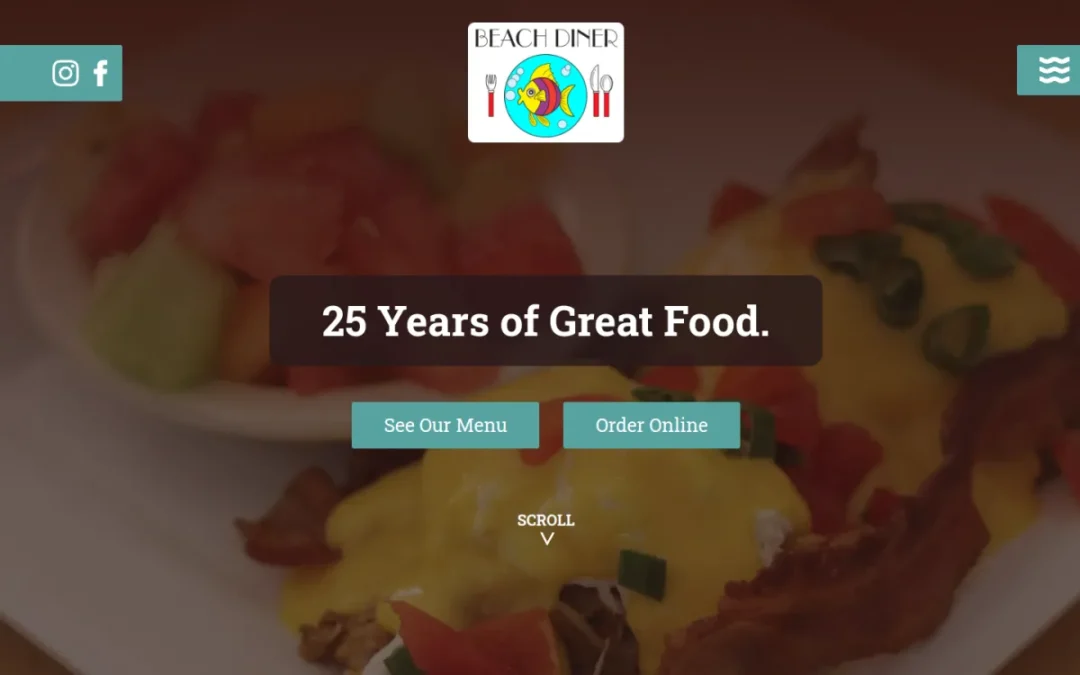
We design restaurant sites as part of our work across St. Augustine and Palm Coast: fast mobile-first pages, HTML menus, reservation and ordering links up top, profile optimization alongside. Our portfolio includes restaurant work like La Fiesta Mexican Restaurant, and across all industries we have 100+ launches over 10+ years with a 5.0 Google rating from 33 clients. Every project is scoped individually — request a quote if yours is due for a rebuild.
Frequently asked questions
Why should a restaurant menu be HTML instead of a PDF?
An HTML menu loads fast on a phone, reflows to the screen, can be read by search engines and screen readers, and takes minutes to update. A PDF menu is slow, hard to read on mobile, mostly invisible to search and a chore to keep current.
What should a restaurant website show first on a phone?
The kind of food, whether you are open now, where you are, and a one-tap path to the menu, plus reservation or ordering buttons in the header. Everything else, story, press, gallery, comes after those four answers.
How do St. Augustine and Palm Coast restaurant markets differ?
St. Augustine traffic is heavy with visitors who decide fast on photos, menu and distance. Palm Coast skews toward year-round and seasonal residents who reward consistency, current hours and easy repeat visits, with beach traffic along A1A and the Hammock.
Do restaurants need online ordering on their own website?
If you do takeout, yes, link your own ordering system prominently rather than relying only on delivery apps, which charge for every order and keep the customer relationship. Keep the apps as extra channels, not the only channel.
How do restaurants show up in the Google map pack?
With a complete Google Business Profile: the most specific category, real photos, a menu link, accurate hours including holidays, and steady reviews with replies. No one can guarantee a map ranking, but complete and active profiles consistently outperform neglected ones.
How often should a restaurant website be updated?
Whenever hours or the menu change, and seasonally for photos, banners and special menus. A site you can edit in minutes without a developer makes that realistic, which is why we build them that way.