
Websites & SEO for Vacation Rental Managers: winning direct bookings
From St. Augustine Beach to Ormond-by-the-Sea: how rental managers build a direct-booking channel beside the platforms — booking engines, property pages and local content.
If you manage vacation rentals anywhere along the coast from St. Augustine Beach down through Flagler Beach to Ormond-by-the-Sea, the big listing platforms are probably both your best sales channel and your biggest line of frustration. They bring demand you could not generate alone — and in exchange they take a commission on every booking, control the guest relationship, and can change the rules under you whenever they like. The way out is not quitting the platforms. It is building a direct channel beside them: a site where repeat guests and search traffic can book without an intermediary. That starts with vacation rental website design that treats the site as a booking engine, not a brochure.
Why direct bookings are worth the work
- The guest is yours. On a platform, the guest belongs to the platform; you often cannot even email them after checkout. Direct guests can be invited back next season.
- No commission on the booking. Whatever the platforms charge, a direct booking does not pay it, which gives you room on rate, flexibility on policies, or simply margin.
- Resilience. An algorithm change or account issue on one platform hurts far less when it is one channel among several.
- Control of presentation. Your best property deserves better than a template listing sandwiched between competitors.
None of this happens automatically when a site launches, and no one can guarantee you a ranking or a booking volume. What a well-built site does is make the direct channel possible — then local content, SEO and repeat-guest marketing grow it over seasons.
The non-negotiables of a direct-booking site
A manager's site has one job above all: let a guest who is ready to book actually book. That means a real booking engine, not a “check availability” form that turns into phone tag.
- Live availability and pricing synced with your property management system and your platform calendars, so a direct booking can never collide with a platform booking.
- Secure online payment inside the booking flow, with your deposit and cancellation terms stated plainly before checkout.
- Mobile-first everything. Trip planning happens on phones; a date picker that fights a thumb loses the booking.
- Trust signals: your license and registration details, years managing, real reviews, a staffed local phone number, and clear house policies. A direct booker is placing more trust in you than a platform booker — earn it visibly.
Property pages that can rank and convert
On the platforms, your listing competes inside their search. On your own site, each property page can compete in Google — if it is built as a real page: a unique written description (not the listing blurb pasted again), honest photography in large format, sleeping arrangements, distances to the beach and the landmarks guests ask about, a map, reviews for that property, and the booking widget right there. Group properties by area and by feature — oceanfront, pet-friendly, pool — so both guests and search engines can navigate the inventory.
Local content: the search traffic platforms cannot take
Someone searching “oceanfront rental Flagler Beach” or “pet friendly rental St. Augustine Beach” is close to booking. Someone searching “best beaches near St. Augustine” or “things to do in Ormond-by-the-Sea” is earlier in planning — and almost no platform page answers them well. A manager who publishes genuinely useful area guides for the communities they operate in — St. Augustine Beach, Crescent Beach, Vilano Beach, Flagler Beach, the Hammock, Ormond-by-the-Sea, Daytona Beach Shores — earns planning-stage visitors and links each guide to the properties nearby. This is slow-build work, and it is also the moat: a competitor can copy a template, but not two years of honest local content.
Keep the platforms; change the mix
A sensible strategy is channel balance, not platform exile. Keep the listings for discovery. Use the stay itself — welcome materials, follow-up where the platform permits it — to tell guests the direct site exists for next time. Collect emails from your direct bookers and ask past direct guests back each season. Over time the goal is a growing share of bookings that arrive commission-free, not an overnight switch.
Hosting and uptime: the part nobody notices until it costs a booking
Booking-driven sites earn their keep in bursts: holiday weekends, event weekends, the weeks after New Year's when next summer gets planned. That is precisely when slow or flaky hosting loses real bookings. Fast, maintained, monitored hosting — with the booking engine tested after every update — is part of the product. See our website hosting in St. Augustine page for how we handle it.
Who builds this kind of site
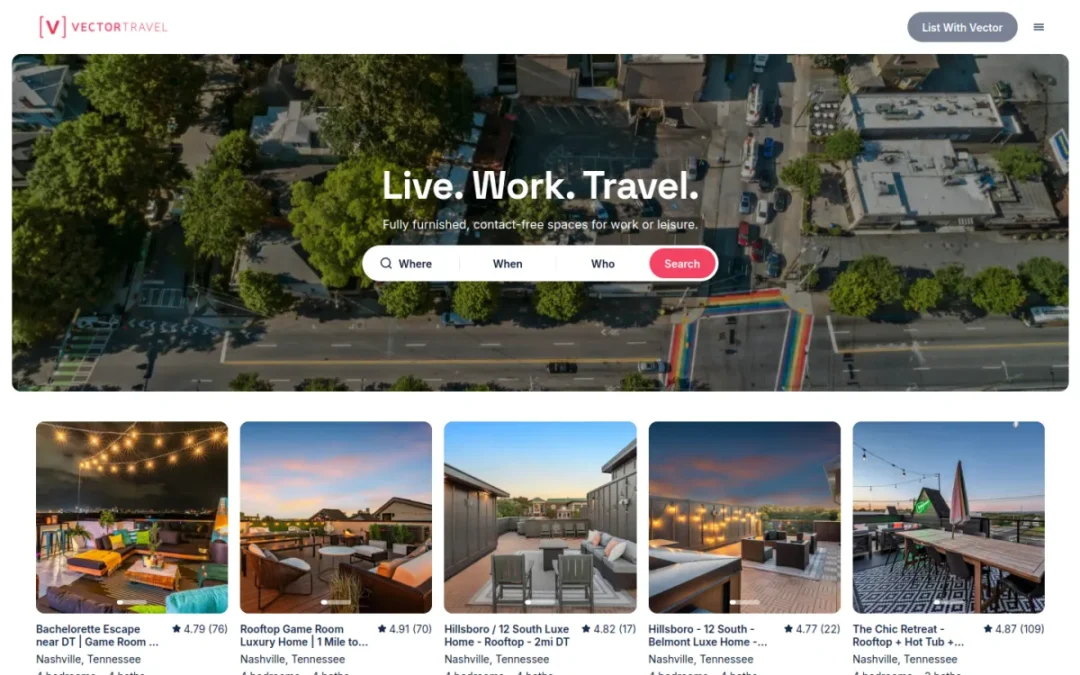
We have designed and built booking-driven sites for more than ten years, including Vector Stays, a furnished-stay booking brand, among 100+ launches — and we hold a 5.0 rating on Google from 33 clients. We can work across this whole corridor: see web design in St. Augustine, web design in Flagler County and web design in the Daytona Beach area. Every project is scoped individually, so if you are weighing a build, request a quote.
Frequently asked questions
Should a vacation rental manager leave Airbnb and Vrbo?
Usually no. The platforms remain strong discovery channels. The goal of a direct-booking site is channel balance: keep the listings, build your own channel beside them, and grow the share of bookings that arrive without a commission over time.
What does a vacation rental website need to take direct bookings?
A real booking engine with live availability and pricing synced to your property management system and platform calendars, secure online payment, clear policies before checkout, strong property pages and visible trust signals like licensing, reviews and a local phone number.
How do vacation rental sites get found in Google?
Through property pages built as real pages with unique descriptions, and through local content: honest area guides for the communities you operate in, from St. Augustine Beach to Ormond-by-the-Sea. It builds over seasons, and no one can guarantee rankings or booking volume.
Will a direct-booking site double-book against the platforms?
Not if it is built correctly. Calendar sync between the site's booking engine, your property management system and each platform keeps availability consistent everywhere. That sync is one of the first things to verify in any proposal.
Is this different from a real estate website?
Yes. A real estate site sells properties with IDX/MLS search for buyers; a rental manager's site sells stays, with nightly availability, payments and guest trust signals. They share almost nothing beyond both needing to be fast and mobile-first.
How is a vacation rental website project scoped?
It depends on inventory size, the booking engine and property management system involved, and how much content the site launches with. Every project is scoped individually, so the honest answer is to request a quote for your specific setup.